(6,601 - 6,620 of 10,079)
Pages
-
-
Title
-
THE RELATIONSHIP BETWEEN SLUGGISH COGNITIVE TEMPO AND PERFORMANCE ON TASKS OF PROCESSING SPEED: INFLUENCE OF DEPRESSION
-
Creator
-
Kim, Jeong Hye
-
Date
-
2021
-
Description
-
Sluggish cognitive tempo (SCT) is often associated with reported difficulties in various functional areas, including daily activities,...
Show moreSluggish cognitive tempo (SCT) is often associated with reported difficulties in various functional areas, including daily activities, emotional functioning, cognitive functioning, academic performance, and sleep. However, there are only a handful of research studies on SCT and neurocognitive functioning in adult populations, and the neuropsychological profile of SCT in adults is unclear.The purpose of this research is to investigate the effect of depression on the relationship between a self-reported measure of SCT and objective measures of SCT in adults by focusing on processing speed performance. The result of this research supports the previous notion that SCT is a novel and independent condition distinct from ADHD, and there are significantly positive relationships between symptoms of SCT and Inattention and Hyperactivity/Impulsivity. Furthermore, SCT and depression are also positively associated indicating the people who experience more symptoms of SCT report more symptoms of depression. However, results did not support the hypothesis that SCT significantly contribute to differences in performance on various types of neuropsychological tasks (WAIS PSI, Trail Making Test, and CPT-II Reaction Time) assessing processing speed after controlling for symptoms of ADHD (inattention and hyperactivity/impulsivity) and symptoms of depression. It is notable that the significant model beta weights for SCT in the final regression model suggests that the relationship between SCT and processing speed is worthy of additional investigation.
Show less
-
-
Title
-
REVISITING MODERNIST MASS-HOUSING: RESIDENTS AS ACTIVE AGENTS OF CHANGE
-
Creator
-
Shah, Nadia
-
Date
-
2021
-
Description
-
In this PhD research, I have examined the modernist approach of mid-20thcentury mass housing projects against the backdrop of post-colonial...
Show moreIn this PhD research, I have examined the modernist approach of mid-20thcentury mass housing projects against the backdrop of post-colonial nation building
and the need for housing refugees through resettlement projects after World War II. In
this epoch most of the refugees were accommodated in newly decolonized nation
states that were struggling to create their national identity as ‘modern'. It was at
this critical moment in history, when the West assumed the paternalistic role of
development of the so-called ‘Third World’, the ‘Global South’ or the ‘Underdeveloped
Nations’, that they defined what is 'modern' using Western standards of ‘normalcy’.
Aboard this international development project, architectural modernism’s response
was to ‘generalize problems’ and provide ‘normative prescriptions’ as solutions based on
rational models. I have reviewed the timeline of modernist ideas that led to mass housing
and the associated notion of ‘normalization of space,’ presenting three scales used to
organize society: regional planning, land use zoning, and mass-produced architecture, as a
prescriptive process.
I have examined architecture’s ‘normalization’ as a source of conflict for nation
states in their process of national identity formation. I argue that the pedagogy of both
modernism and late modernism, presented cultural distinction as an intermediary
condition that was subject to change. In particular, modernist architecture engaged with
the “concept of normalcy” for the formation of a modern society through spatial and
physical organization. Using the case study of Pakistan, I present how this notion was at
odds with Pakistani nationalism, since the country was created on the premise to house a traditional society.
I have used the example of the Greek architect, Constantinos Doxiadis and his
trajectory of late modernism for solving the global housing crisis after World War II.
For this purpose, I present the case of a particular post World War II refugee
resettlement project called Korangi Town in Karachi Pakistan. This case is studied in the
light of modernist planning and architectural models to examine what was proposed,
designed, and predicted by this professional architect and how Korangi Town has
evolved in the past sixty years. The objective is to see how the new normal
architecture and planning standards of the West were received in the non-Western
culture? The case study of Korangi Town reveals that the residents of a locale may
organize themselves along cultural and ethnic lines, deviating from implemented
prescriptive and normative solutions.
The changes that the residents made to their built environment through the
processes identified as ‘appropriation’, ‘adaptation’ and ‘expansion’ in the dissertation
are interpreted as the signs of their active agency. The residents’ agency emerges to
reshape their built environs to meet their cultural and individual needs, but most of
all their economic needs. These observations show that rather than being passive
recipients of ready-made and prescriptive solutions, the residents were active agents in
adjusting and adding to their environment.
Inhabitants’ active agency needs attention by the planning and architecture
professions to assure that environments intended for them have their meaningful input.
This dissertation raises questions about how these professions can support this active
agency from the beginning and through the planning and design processes.
Show less
-
-
Title
-
Eating Pathology Among Ethnic Subgroups of Latinas: An Examination of Acculturative Stress and Ethnic Identity
-
Creator
-
Quinones, Isabel Cristina
-
Date
-
2021
-
Description
-
Latin women (Latinas) in the U.S may experience acculturative stress if ethnic group pressures regarding body ideals differ from the U.S. body...
Show moreLatin women (Latinas) in the U.S may experience acculturative stress if ethnic group pressures regarding body ideals differ from the U.S. body ideal. As a population consisting of multiple countries, the distinct cultures and customs among subgroups may impact how women from heterogeneous Latino countries/cultures perceive acceptable body weight and shape, as body ideals are culturally constructed. Furthermore, an individual’s ethnic identity level may impact the way acculturative stress relates to eating pathology. This study investigated 1) acculturative stress as a mediator of the relationbetween ethnic group and eating pathology among specific Latina subgroups, and 2) ethnic identity as a moderator of the association between ethnic group and acculturative stress, acculturative stress and eating pathology, and ethnic group and eating pathology. Mexican (n=30), Puerto Rican (n=31), Cuban (n=29), and non-Hispanic, White (n=30) women living in the U.S. were recruited via Prolific Academic to complete self-report questionnaires regarding ethnic group, ethnic identity level, acculturative stress, and eating pathology. Moderated mediation analyses supported a significant indirect effect of
ethnic group on body dissatisfaction, binge eating, purging, restricting, excessive exercise, and negative attitudes towards obesity through acculturative stress, such that group differences were mediated by acculturative stress levels. Further, the association between acculturative stress and body dissatisfaction was dependent on strength of ethnic identity; there was a positive simple slope for women with low and moderate levels of ethnic identification (low b = 2.30, moderate b = 1.36, both p <0.001) but not for those with high ethnic identity (b = 0.52, p = 0.22), suggesting that a higher ethnic identification may be protective against the development of body dissatisfaction in Latinas experiencing acculturative stress. Findings support the importance of separating heterogeneous subgroups of Latinas and explicitly assessing acculturative stress. Assessment and preventive action should include addressing increased acculturative stress and the risk it may pose for Latinas endorsing eating pathology given that the combination of ethnic group, acculturative stress, and ethnic identity may pose an increased risk for Latina individuals vulnerable to eating pathology.
Show less
-
-
Title
-
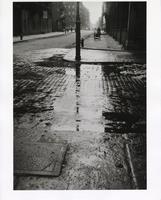
Sunday Morning in New York
-
Date
-
1943
-
Description
-
Photograph includes signed inscription (dated 12/24/1991) from Nathan Lerner to Kiyoko Lerner on verso. Numbered #44.4.3.The date for this...
Show morePhotograph includes signed inscription (dated 12/24/1991) from Nathan Lerner to Kiyoko Lerner on verso. Numbered #44.4.3.The date for this photograph is often listed as 1944 in other sources, the date above was taken from the artist's inscription on the verso of the photo.
Show less
-
Collection
-
Nathan Lerner photographs, 1935-1980
-
-
Title
-
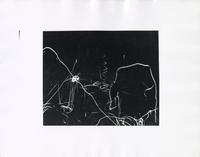
Light Drawing - Head
-
Date
-
1939
-
Description
-
Light drawing photograph made by moving a light source during a long exposure. Title, date inscribed on verso. Numbered B-21. Mounting...
Show moreLight drawing photograph made by moving a light source during a long exposure. Title, date inscribed on verso. Numbered B-21. Mounting inscribed with title, date and numbered 100, B-21, INV3637, #44
Show less
-
Collection
-
Nathan Lerner photographs, 1935-1980
Pages
